


- home/
- odor solutions/
- how to use/
the science of odor
the science of odor
Odor is caused by tiny molecules released into the air from everyday sources like food, pets, smoke, moisture, and waste. These odor-causing molecules are often invisible, but they can move through air, settle onto surfaces, and become trapped in materials like fabrics and carpets. Understanding how odor works helps explain why smells linger and how to effectively reduce them.
What causes odor?
Odors are created when molecules from a source enter the air and reach your nose. These molecules can come from everyday activities such as cooking, cleaning, waste, pets, and moisture.
Some odor-causing molecules are released immediately, while others form over time as materials break down. Since these molecules are small and lightweight, they can move through air easily and spread throughout a space. That’s why odors can travel beyond the original source and become noticeable in other parts of a room or home.
How we smell odor
We smell odors through the sense of smell, which starts when odor causing molecules in the air enter the nose and reach olfactory receptors in the upper part of the nasal cavity. These receptors are part of the olfactory system and are supported by specialized sensory cells that respond to different types of molecules.
When these cells are activated, they send signals to the brain, which interprets them as specific smells. This is why humans can detect even small amounts of odor causing molecules, and why some smells may seem strong even at low concentrations. It’s also why the nose can recognize different smells from similar sources, such as cooking, pets, smoke, or moisture.
How odor moves through a space
Once released, odor-causing molecules can travel through the air, spread into nearby areas, settle onto surfaces like walls and furniture, and become trapped in soft materials such as fabrics and carpets. This is why an odor that starts in one area can affect an entire space. It’s also why room air quality can change quickly when smoke, cooking, or moisture is present.
Why fabrics hold on to odor
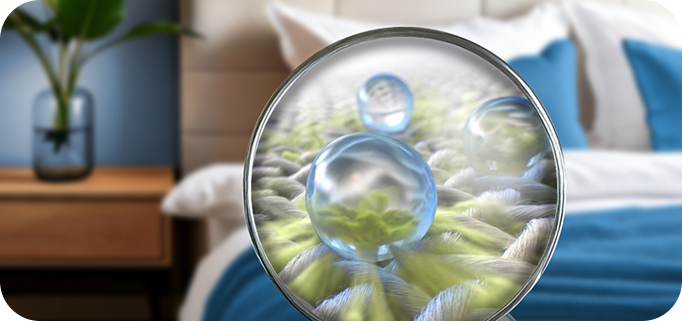
Soft materials like fabrics and carpets are porous, meaning they have tiny spaces that can trap odor-causing molecules. Once trapped, these molecules can remain in the material and be released back into the air over time, especially when the material is disturbed.
Why odors come back (reblooming)
Odor-causing molecules can remain on surfaces and in fabrics and rebloom into the air over time. This can happen when fabrics are disturbed, when temperature increases, or when humidity and odor interact. This is why odors can return even after they seem to be gone.
How environment affects odor
Environmental conditions can influence how noticeable an odor is.
- Heat can increase how quickly odor-causing molecules are released
- Humidity and odor can work together to make smells linger longer
- Limited airflow can cause odors to build up in enclosed spaces such as bathrooms, cars, and basements
In other words, the same odor may seem stronger depending on the room and the conditions around it.
Covering odors vs. fighting odors
Some products use fragrance to help cover unwanted smells, while others are designed to help fight odor by targeting odor causing molecules. Covering an odor can make a space smell fresher temporarily, but the original odor may still be present.
Products designed to fight odor at the source can help reduce the smell itself and provide longer lasting freshness when used as directed.
How Febreze helps fight odor
Febreze products are designed to help fight odor by interacting with odor causing molecules, helping reduce unwanted smells rather than simply covering them with fragrance.
Different Febreze solutions can help address odors in different areas of the home, including the air, fabrics, continuous spaces, and odor source areas. Always use products as directed and choose the product format that best fits where the odor is coming from.
A simple way to think about odor
Odor can be understood in three parts:
- The source: Where the odor starts, such as food, pets, smoke, moisture, or waste.
- Surfaces: Where odor causing molecules can settle or become trapped, such as fabrics, carpets, upholstery, and other soft materials.
- Air: Where odor spreads and becomes noticeable.
Frequently asked questions
What are odor causing molecules?
Odor causing molecules are tiny compounds released from sources like food, waste, pets, smoke, or moisture. When these molecules enter the air, they can travel through a space and be detected by the human nose.
How does the human nose detect odors?
The human nose detects odor when airborne molecules reach olfactory receptors in the upper part of the nasal cavity. These receptors send signals to the brain, which interprets them as specific smells. Different molecules can activate different receptors, helping us recognize a wide range of odors.
Why do odors linger even after cleaning?
Odors can linger when odor causing molecules remain trapped in fabrics, carpets, upholstery, or other surfaces. Over time, these molecules may continue to release back into the air, making the smell noticeable again.
Why do odors get stronger in heat or humidity?
Heat can make odor causing molecules release into the air more quickly, which can make smells more noticeable. Humidity can also make some odors feel stronger or cause trapped odors to rebloom into the air.
What is the difference between covering odors and fighting odors?
Covering odors uses fragrance to help make a space smell fresher temporarily. Fighting odors focuses on helping reduce odor causing molecules rather than simply covering the smell with fragrance.
References & additional information
Odor is caused by airborne molecules that can travel, settle, and persist in enclosed environments. These molecules are influenced by airflow, temperature, and humidity, which affect how odors are perceived and how long they last.
For more information on indoor air and odor behavior, visit the United States Environmental Protection Agency: https://www.epa.gov/indoor-air-quality-iaq/introduction-indoor-air-quality
For details on Febreze ingredients, safety standards, and how our products are designed, visit the Febreze Safety & Ingredients page: https://www.febreze.com/en-us/safety-and-ingredients